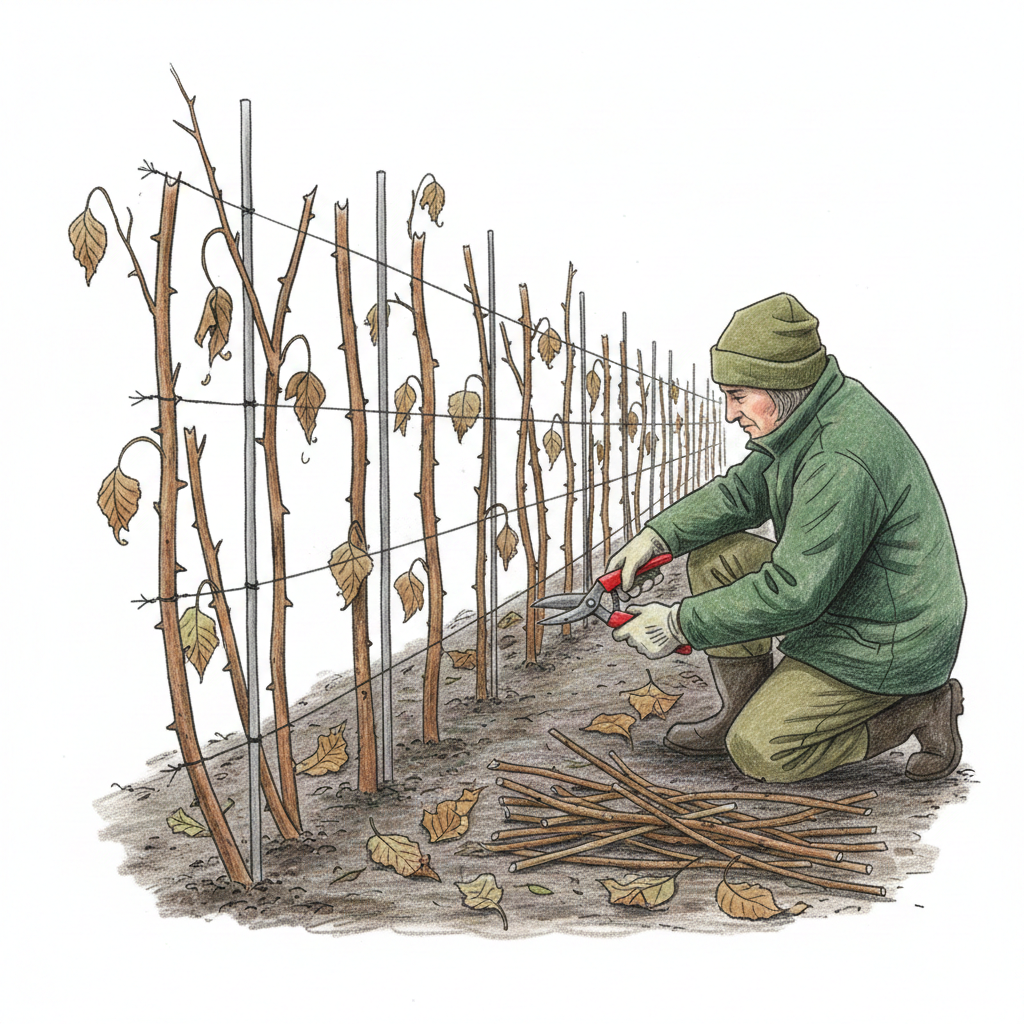
As the calendar turns to January, the garden settles into its mid-winter slumber. This quiet season presents the perfect opportunity for one of the most satisfying and straightforward fruit garden tasks: pruning autumn-fruiting raspberries. Unlike their summer-fruiting cousins, which require a more selective touch, autumn-fruiting varieties like ‘Autumn Bliss’ or ‘Joan J’ are incredibly forgiving. The goal this month is simple but transformative: every single cane currently standing must be cut right down to soil level.
By removing all of last year’s growth, you essentially hit the reset button on the plant’s life cycle. These raspberries produce fruit on the current season’s wood. The lush green shoots that emerge in spring will carry the heavy clusters of berries by late August. Leaving old canes standing is a common mistake. It results in a messy, congested thicket and encourages the spread of fungal diseases.
To get started, ensure your secateurs are sharp and clean to prevent tearing the stems. Work your way along the row, snipping each cane as close to the ground as possible. If you leave long stumps, they can sometimes rot or produce weak, spindly growth. Once the ground is clear, it is the ideal time to weed the area and apply a thick mulch of well-rotted garden compost. This suppresses future weeds and provides a slow-release burst of nutrients that the roots will crave once the soil begins to warm.
This January ritual is an investment in a bountiful harvest. By being bold with your blades now, you are directing all the plant’s energy into vigorous new canes. These will reward you later in the year with a prolific crop of sweet, sun-warmed berries that last well into the first frosts of autumn.