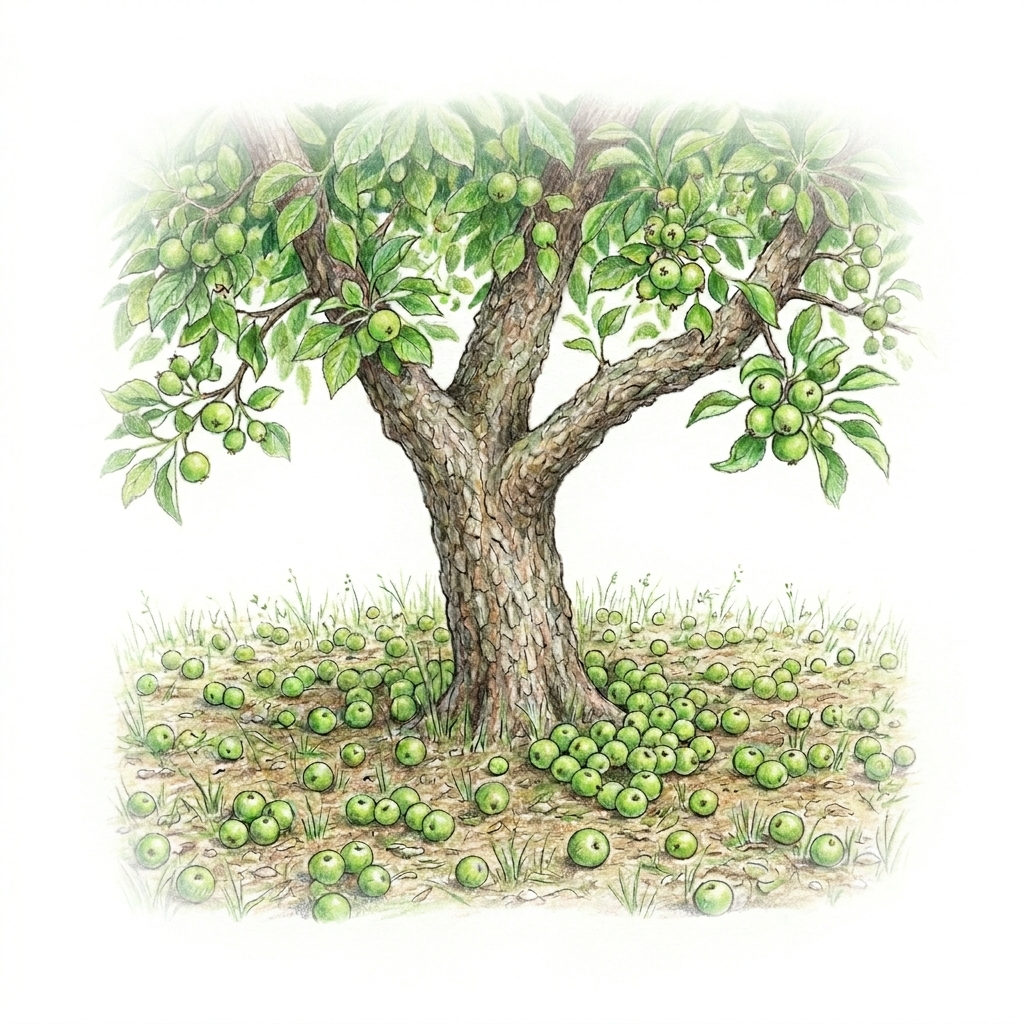
Finding a carpet of tiny, unripe apples scattered across your garden floor can be a disheartening sight. If your fruit trees suddenly deposit hundreds of small fruits on the ground in early summer, it is easy to panic and assume a disease has taken hold. Thankfully, there is no need to worry. This is a perfectly natural phenomenon known to gardeners as the “June drop.”
Essentially, your tree is practising self-care. It realises it cannot successfully ripen every single fertilised blossom, so it sheds the excess weight to channel its energy into the remaining crop. The only flaw in the tree’s strategy is that it is entirely indiscriminate about which fruits it drops. To ensure you get the absolute best harvest, it is highly beneficial to step in and selectively remove the smallest, weakest fruit before the tree does it for you.
Your goal should be to thin out the crowded clusters. Reduce each cluster on a fruit spur to just two healthy fruits. Make sure these remaining two are not touching each other, as contact points can trap moisture and invite pests or rot. While it might feel counterintuitive to pluck perfectly good fruit off a tree, this careful pruning pays off massively by late summer. Not only will the remaining fruit grow significantly larger and ripen better with less competition, but you will also protect the tree itself. Heavy, overloaded branches are prone to snapping under the weight of mature fruit, causing permanent structural damage to the tree.
When you are growing fruit to be eaten fresh rather than pressed into juice, quality will always triumph over quantity. A handful of large, sweet, juicy apples is infinitely better than a basket full of stunted, sour ones. Embrace the June drop, guide it along, and your trees will thank you.