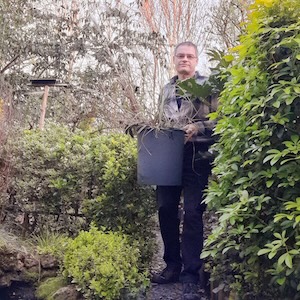
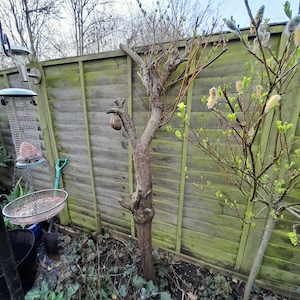
It’s the middle of March, and the relentless downpour of the very British weather has finally ceased and actually provided a weekend of genuine, unadulterated sunshine—it was beautiful—the sort of light that makes you think, “Yes, I shall go forth and create a horticultural masterpiece.” Then you step outside to find that after the depressing winter months, the garden resembles a zombie apocalypse movie; the dead wood and skeletal remains could have made a good backdrop for a 1980’s horror film.
So, I started with the pond—you’d expect the water to be a clear, beautiful reflection of the sky—but not mine, it was a startling, flat grey, reminiscent of a builder’s cup of tea. The reason? A frog mating orgy of such industrial proportions that the randy little blighters had managed to churn up the surrounding clay soil and drag it into the depths with them. It was a scene of amphibian debauchery that would have made a porn star blush—I spent a good hour pulling out clumps of weed that felt like wet wool with an aroma that could only be described as smelling like a “Victorian sewer… on steroids”.
However, there was a moment of genuine triumph—I tinkered with the small solar pumps for what seemed like a waste of time, cleared the winter gunk out of their plastic cases, and suddenly they sputtered into life, sending a pathetic but deeply satisfying trickle of water back into the abyss. It isn’t exactly the Bellagio fountains, but in the quiet of a March afternoon, watching a solar-powered motor defeat a winter’s worth of frog-induced silt felt like winning Britain’s Got Talent.
Next, I turned my attention to the Ivy growing across the top of my living room windows. Ivy is a plant with the persistence of a double-glazing salesman; it had decided that my window frames were merely a suggestion and was staging a vertical assault on the brickwork. It was one of those necessary jobs that required a bit of firm, focused intervention. I spent some time cutting it back and clearing away from the glass, which Monty would probably say was “inviting the spring light into the home,” but for me, it was just about making sure I could actually see the back garden again.
Finally, I moved on to the Coreopsis and the Zebra Grass. The Coreopsis was easy enough—a quick, ruthless haircut to get rid of the skeletal remains of last year’s efforts. But the Zebra Grass… that was a different story. Zebra Grass is a thuggish, sharp-edged brute that hides its true nature behind a facade of “architectural interest.” In my haste to get the job done, I forgot the golden rule of gardening: never trust a plant named after a wild animal.
I waded in without gloves—which, as it turns out, was a monumental error. The grass basically shredded me. I’ve ended up with a dozen paper cuts that sting with the fury of a thousand sun-drenched lemons; a lovely reminder that even a “peaceful” garden is, in fact, a hostile environment. But honestly, as I stood there—bleeding and smelling quite strongly of Victorian sewer water—I don’t care. The garden finally looks like a place of order, rather than a total botanical riot. It’s a start. It’s messy, it’s painful… and it’s brilliant.