January offers a unique window of opportunity to prepare for the frantic growth of spring. One of the most physically rewarding and visually satisfying tasks during this quiet spell is refreshing your empty raised beds. Throughout the previous growing season, your plants likely depleted the soil of vital nutrients, and natural settling often leaves the soil level lower than when you started. By applying a generous layer of garden compost now, you are essentially recharging the earth, ensuring that your future vegetables have the richest possible foundation.
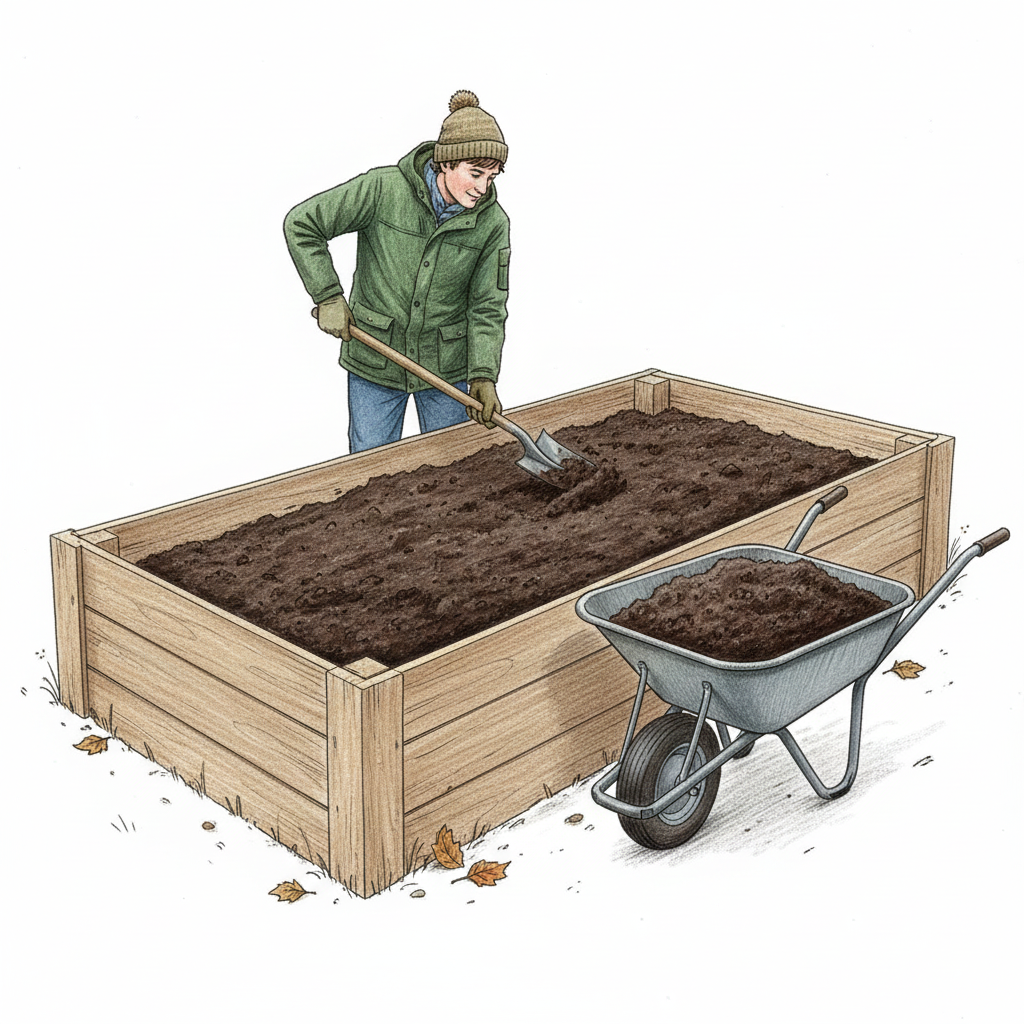
The beauty of this task lies in its simplicity. You don’t need to engage in the back-breaking work of double-digging or deep tilling. In fact, many modern gardeners advocate for the “no-dig” method, which involves simply spreading organic matter on the surface and letting nature do the heavy lifting. By layering three to four inches of well-rotted garden compost or high-quality soil improver over the existing soil, you create a protective blanket. This mulch suppresses any opportunistic winter weeds and protects the underlying soil structure from being compacted by heavy winter rains.
Beneath this fresh layer, a hidden workforce is at play. Even in the cold, earthworms and microscopic soil organisms will gradually pull the nutrients down into the root zone. By the time you are ready to sow your first rows of carrots or transplant your tomato seedlings in the spring, the compost will have integrated beautifully, leaving the soil friable, dark, and crumbly.
Beyond the biological benefits, there is a profound sense of order that comes with a newly topped-off raised bed. The dark, rich texture of the compost against the wooden frames provides a clean slate for the year ahead. It is a promise of productivity made in the depths of winter, ensuring that your garden is not just resting, but actively preparing for a bountiful harvest.