On Good Friday, the start of the Easter gardening weekend, I walked out into the garden to a scene of absolute, unmitigated carnage. My pond—my pride, my joy, my little aquatic sanctuary—looked less like a tranquil garden feature and more like a scene from a low-budget disaster movie. In a truly spectacular display of incompetence, that piddling little solar pump had decided that instead of trickling gently over the rocks, it would rather siphon the water directly into the soil behind the liner.
Essentially, I had spent the previous day draining half my pond contents into the border. It was, frankly, a bit of a DIY disaster.
The water level had dropped by several inches, and the tadpoles were looking at me with the kind of sheer, unadulterated contempt normally reserved for people towing caravans with a long line of traffic behind them. It was clear: I had to do something, and I had to do it quickly. Now, I’m not claiming to be the next Capability Brown—mostly because I don’t own a waistcoat—but I’ve always been of the opinion that a pond is just a giant, leaky hole in the ground, and currently I have a committee of angry amphibians who are not impressed with my DIY skills in the faintest.
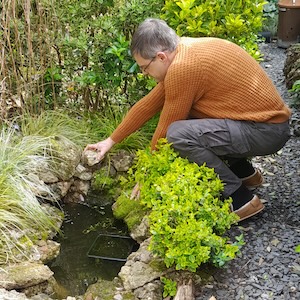
I spent the next four hours sweating like a trapped ferret. I manhandled the offending rocks, re-levelling the edge until the water once again obeyed the basic laws of physics. It was exhausting, and I’m quite sure I’ve put my back out, but there’s a certain grim satisfaction in bending the landscape to your will.
While I was at it, I thought, why stop there? I decided to construct a new half-submerged rock wall at the far end of the pond. It needed texture. It needed gravitas. I wrestled several large, moss-covered rocks into place, swearing under my breath as I trapped my fingers. It’s a bit rough around the edges, yes, but it possesses a certain rugged charm of a man with a plan.
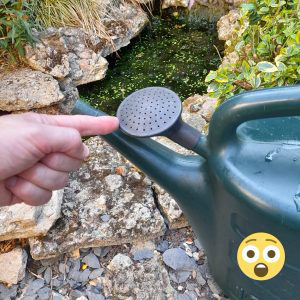
I’ve topped up the levels using a bucket or two of pond water from the larger pond, which, frankly, is far better for the residents. You see, your local tap water is a recipe for disaster; tap water is laced with enough chlorine to kill a sensitive tadpole. Ideally, you’d wait for the heavens to open and use proper rainwater, but if you absolutely must resort to the kitchen tap, for heaven’s sake, let the stuff sit out for a few days first. It needs time to let the chlorine evaporate before you subject the wildlife to it.
It’s all finished now. The water was trickling perfectly until I sat on the bench with a very large cup of tea, wondering why the sun chose this exact moment to clock off, taking my solar cascade with it. Still, it looks rather splendid.