March is the time to get your ornamental grasses back in shape, but your approach has to match the type of plant you’re dealing with. For the deciduous varieties—think of the architectural Miscanthus, upright Calamagrostis, or airy Deschampsia—it is time for a drastic haircut. You want to cut these right back to the ground. The key is timing; you need to get this done before the fresh, green shoots of the new season start poking through the old straw. If you wait too long, you’ll end up snipping the tips of the new growth, which leaves the plant looking ragged all summer.
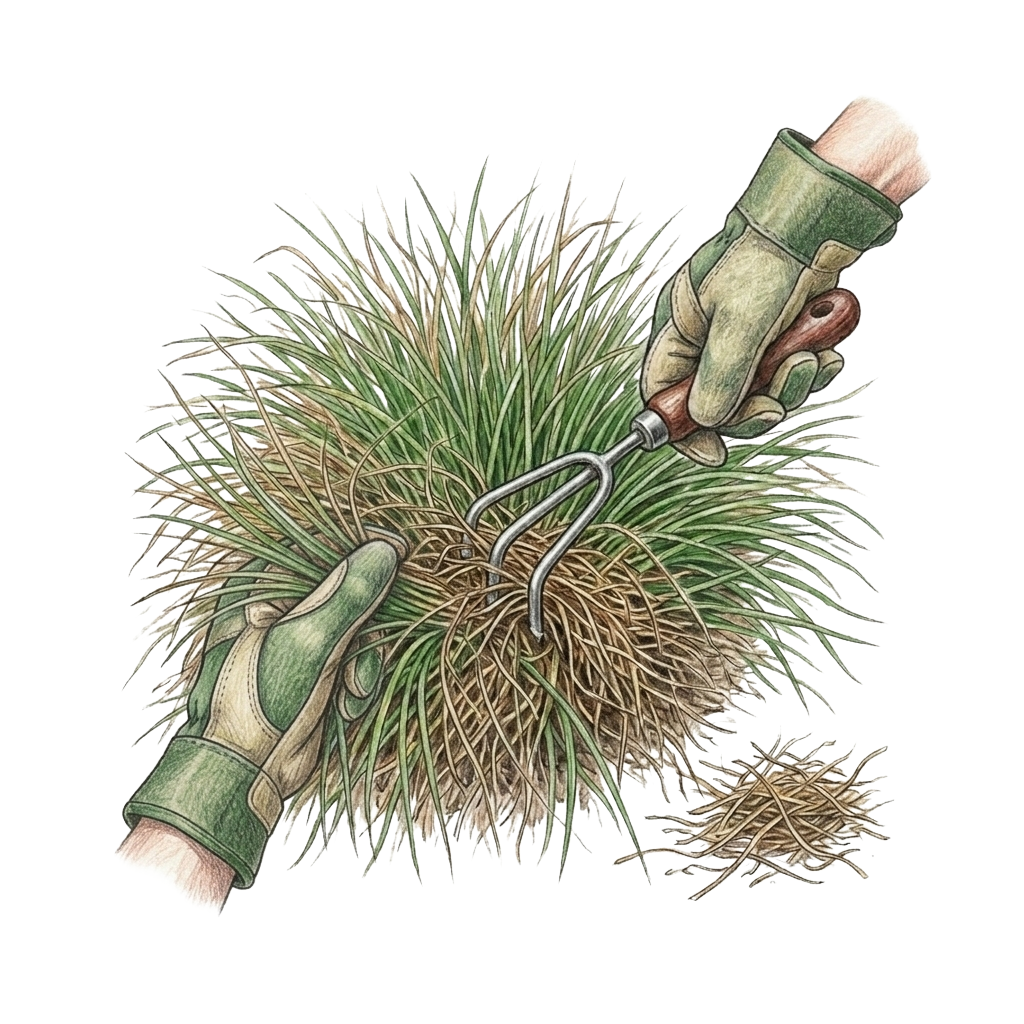
Evergreen grasses, such as the Stipa or Cortaderia (Pampas) families, require a much lighter touch. You should never cut these back to the ground, as it can often kill the plant or take years for it to recover. Instead, give them a good “grooming.” I find the best way is to simply comb through the foliage with your hands or a small rake to pull out the dead, brown thatch. A word of warning: always wear a pair of thick, stout gloves. Grass blades can be surprisingly sharp and will give you a nasty paper-cut style wound before you even realise it.
Once you’ve finished the cleanup, it’s a great idea to mulch around the base. However, grasses actually prefer a low-nutrient mulch. Avoid rich garden compost or manure; pine bark helps retain moisture and keep weeds out without overfeeding.
Finally, resist the urge to divide or move your grasses just yet. Unlike many perennials, grasses require a state of active, vigorous growth to survive a move. If you disturb the roots now, they may not recover. It’s far better to wait until the warmth of late May or June to start digging them up.