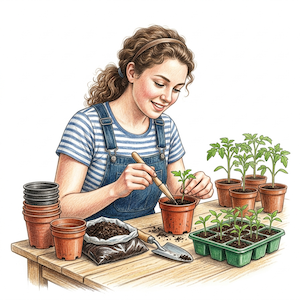
Timing is everything when it comes to the delicate transition of young plants, and for tomato seedlings, that golden moment arrives the second you spot their first set of “true leaves.” These are the ones that actually look like miniature versions of a mature tomato plant, distinct from the smooth, simple seed leaves that first emerged. Moving them at this stage ensures they have enough of a foundation to survive the move without being so established that their roots become an intertwined mess.
The most important rule to remember is to always handle the seedling by one of its sturdy leaves rather than the stem. Think of the stem as the plant’s spine; if it gets pinched or snapped, the plant is finished. A leaf, however, is replaceable, and the plant can easily grow a new one if a tiny bit of damage occurs. Using a small spatula or even a plastic plant label, gently lever the seedling upward. Your goal is to keep as much of the thread-like root system intact as possible, ideally keeping a small bit of the original compost attached to the roots to minimise transplant shock.
As you settle them into their new homes, choose individual small pots or cell trays. It’s tempting to go big, but a pot that is too large holds excess water, which often leads to rot. Use a slightly richer compost blend than you did for sowing, perhaps with a handful of perlite to keep things airy and a bit of sieved home-made compost for a nutrient boost.
Once they are tucked in, return them to the warmth of the greenhouse. They will spend the next few weeks growing strong and sturdy, preparing for that final move into the garden once the threat of frost has passed in late May.