The February quiet period is the best time for a specialised bit of maintenance: reviving your secateurs. They are the most frequently used tool in any gardener’s arsenal, yet they are often the most neglected. After a year of pruning roses, thinning perennials, and clearing deadwood, the blades get covered with sap and lose their surgical edge. Giving them a good clean and sharpen now ensures that your first cuts of spring are effortless.
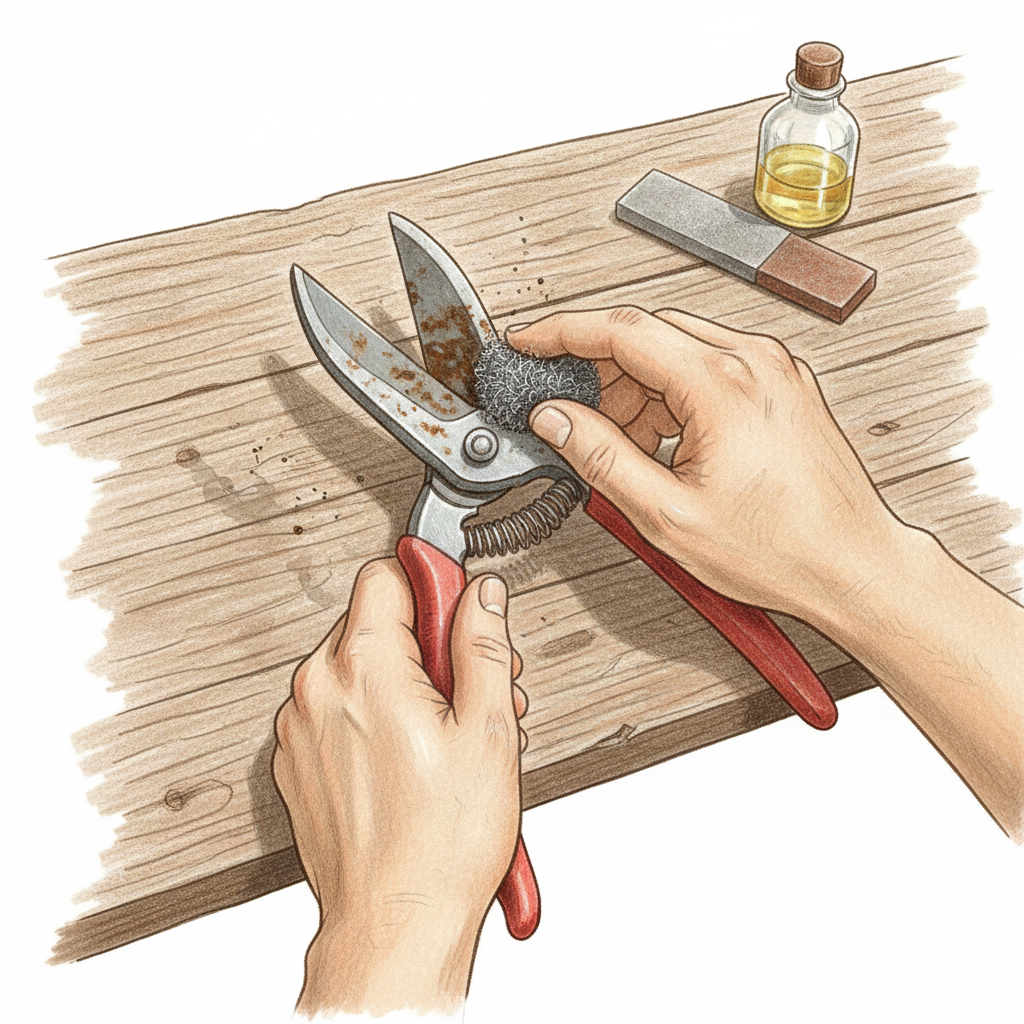
Secateurs often harbour hidden pathogens or sticky resins that can seize the spring mechanism. Start by using a stiff brush and warm, soapy water to remove stubborn sap. If you notice signs of oxidation, a light scrub with fine wire wool will bring back the steel’s original gleam.
Sharpening is the most critical step for plant health. Unlike hedge shears, secateurs have a single sharpened blade that slides past a thick base (the anvil). Use a whetstone, working only on the bevelled edge of the cutting blade and follow the curve with smooth, outward strokes. Avoid sharpening the flat side, as this creates a gap between the blades that will tear rather than cut.
Finish the job with a drop of WD40 on the pivot bolt and the spring. This lubrication reduces friction and prevents future rust. A pair of secateurs maintained in February doesn’t just cut better; it prevents the spread of disease.