Getting a head start on the vegetable plot in February is one of the most rewarding tasks for any gardener. If the winter weather has relented enough to leave the soil workable, sowing broad beans early is a brilliant way to get a head start with this delicious crop. These early starters benefit from the lengthening daylight and the slight rise in soil temperature, establishing a strong root system quickly. This preparation pays off significantly come harvest time with a delicious crop, a full week or two before your main-season sowings are even ready to pick.
While broad beans are members of the legume family—meaning they possess the unique ability to “fix” nitrogen in the soil via their roots—they are still quite hungry for nutrients. To get the best results, you shouldn’t rely solely on the current soil conditions. Instead, ensure the ground has been enriched with plenty of well-rotted organic matter or compost. This provides the moisture retention and extra goodness they need to thrive during the unpredictable early spring weather.
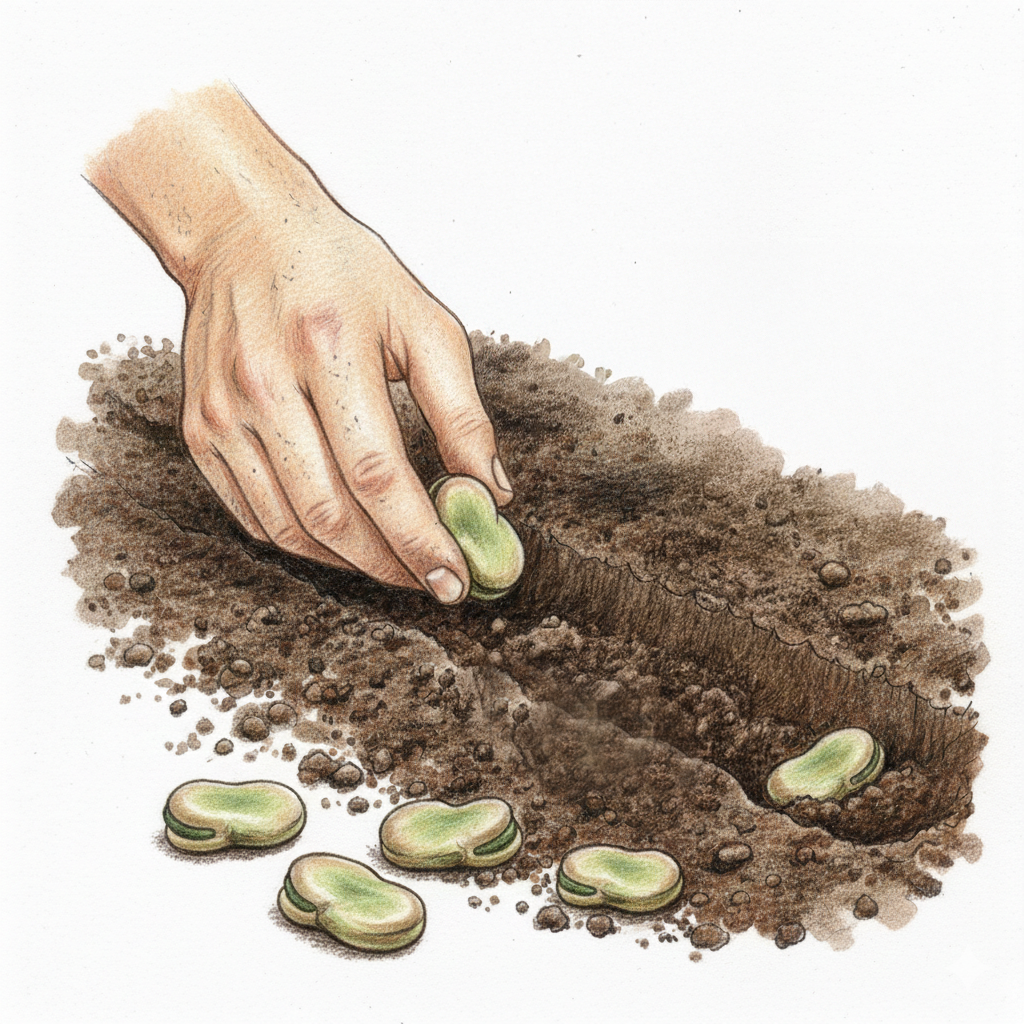
When it comes to actual sowing, spacing is key, ensuring the plants have room to branch out. Aim for a double-row system, spacing individual seeds roughly eight inches apart. Within these double rows, keep a gap of about a foot, allowing yourself easy access for weeding and harvesting. Leave a generous three-foot path between each set of double rows. You can either create a shallow trench (a drill) and lay the seeds inside or, more simply, use your thumb to press each bean directly into the crumbly earth. For these chilly February days, hardy varieties are essential. ‘Aquadulce’ is the preferred choice, though ‘Witkiem’ is another excellent, reliable performer that stands up well to the unpredictable UK climate.