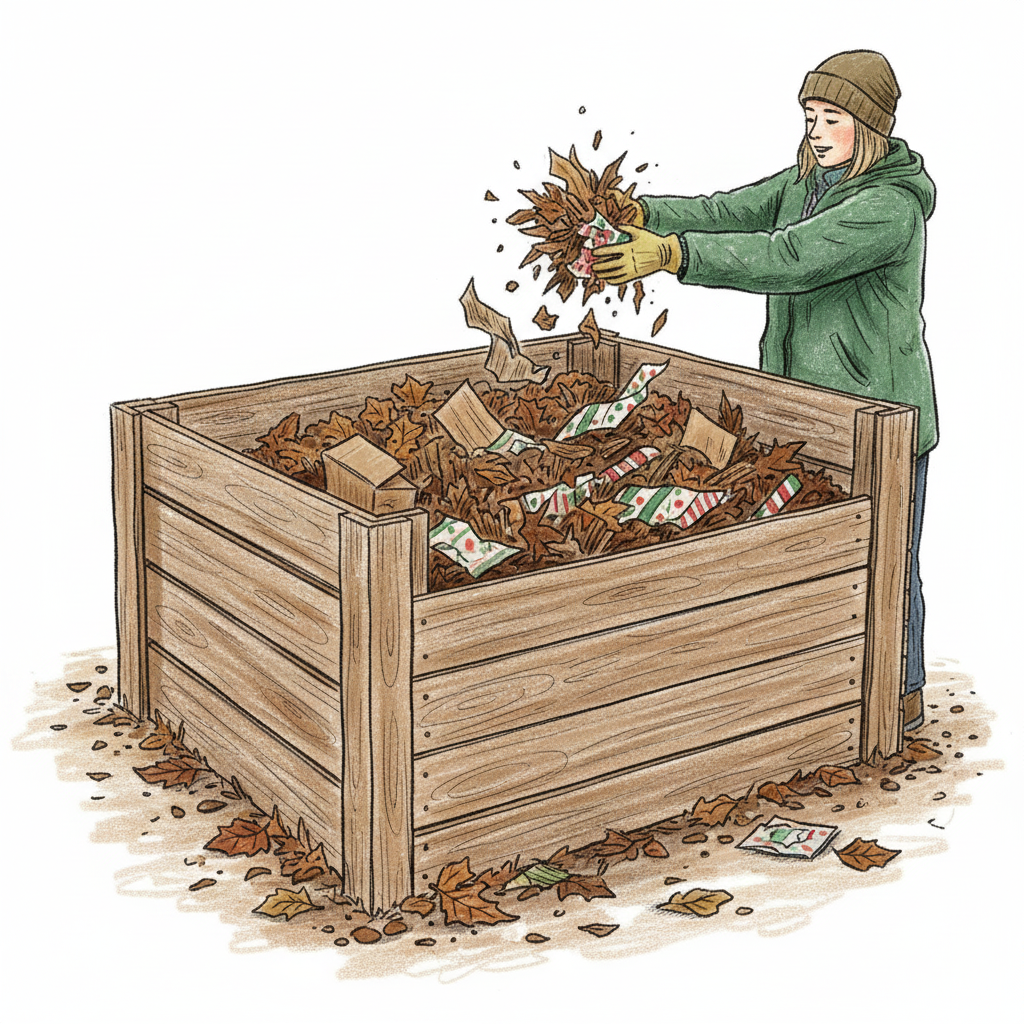
The aftermath of the festive season often leaves households grappling with an overwhelming amount of waste, particularly in the form of wrapping paper and various types of cardboard packaging. While it may feel like a disposable headache, this seasonal surplus is actually useful for the patient gardener. Every scrap of non-glossy wrapping and shredded cardboard can be diverted from the bin and repurposed as a valuable ingredient for your compost heap.
During the mid-winter months, many compost bins suffer from an imbalance. We often have a shortage of “green,” nitrogen-rich materials—such as fresh grass clippings or garden weeds—to offset the heavy influx of “brown,” carbon-rich items. However, there is no need to worry about achieving a perfect ratio at this time. Simply incorporating this paper waste into the pile ensures it begins the slow journey of decomposition; it will eventually integrate into a rich, dark humus as more varied materials are added throughout the coming spring.
One of the most effective ways to manage this winter influx is to keep the pile active by turning it regularly. While the idea of heading outside on a frosty morning might seem unappealing, the physical effort is a fantastic way to stay warm in the January chill. Contrary to popular belief, the primary goal of turning the heap isn’t just to move things around; it is to introduce vital oxygen into the core.
This infusion of air acts as a catalyst for aerobic bacteria. These tiny organisms thrive on oxygen, and as they begin to digest your old Christmas packaging and kitchen scraps, their metabolic activity generates natural heat. Even in the depths of winter, a well-aerated bin can remain a hive of biological activity. By putting in the work now, you ensure that your festive waste is well on its way to becoming nice crumbly compost for your garden.